






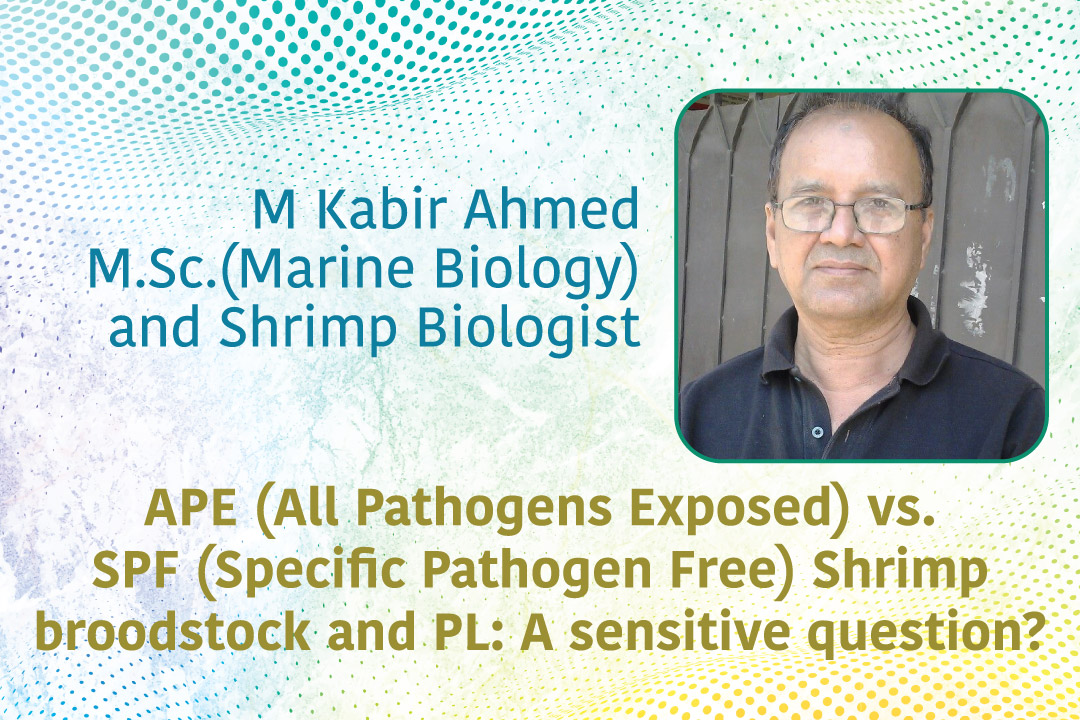
| Disease is the usually the number one issue that faces shrimp farmers around the globe. If you can remain disease free or keep disease in check, you likely will have a very successful crop.
With this goal in mind, hatcheries and broodstock companies have taken two very different approaches in providing animals that will have the best chances of survival against disease when placed in the grow-out ponds. Specific Pathogen Free (SPF) Shrimp: This system was first developed in Hawaii, USA and took advantage of the island’s remote location. In this, broodstock is systematically tested with PCR exams to see if they are infected with any of the specific pathogens that are affecting shrimp ponds. Infected animals are removed, leaving behind only those who are “clean.” The broodstock and hatchery facilities themselves are highly bio-secure to prevent any pathogens affecting the clean animals. The advantage of SPF is that a farmer can be 100% certain that the source of disease on the farm is not from the hatchery or the PL’s. All Pathogens Exposed (APE) Shrimp: The other school of thought in shrimp breeding is called All Pathogens Exposed. Here the broodstock families are purposefully exposed to the outside world and all of the diseases that are prominent (Whitespot, EHP, EMS, etc.). All of those that show the highest survival are kept and bred and the process is repeated. In such facilities bio-security is not a major concern as the animals have already been exposed. The major advantage of APE shrimp is that they have been bred to be tough in the outside world and in the conditions that are common in shrimp farms. APE vs. SPF, Which is Better?: The answer, like so many things in life, is that it depends. SPF is excellent for farms that have invested heavily in bio-security. We are seeing more of these hyper-intensive farms emerge and for them, SPF is the best solution because the animals are bred for growth and they know that the hatchery is not a source of disease. For farms that are growing outdoors, particularly in large extensive ponds where it is harder to aggressively treat the water, APE may be the better options as the animals have already been exposed to the pathogens that one would expect. This is similar to Specific Pathogen Resistance strains where animals are bred for resistance to a specific disease such as EMS. With APE, the animals are exposed to a mixed cocktail of whatever is in the wild waterways, so the resistance is potentially broader. Conclusion: All Pathogens Exposed (APE) Shrimp PL appeared to be better for extensive and non-biosecured farms; and SPF for biosecured intensive or semiintensive farms farms. Use of SPF PL in non-biosecured farms appeared to be dangerous for susceptibility of diseases. Because disease resistance capacity of SPF PL considered to be less than normal PL or All Pathogens Exposed (APE) Shrimp PL. SPF PL is produced from broodstock kept in biosecured domesticated situation for several generations and are less resistant. Again SPF PL may have genetical degradation due to repeated breeding in indoor condition. But this might not happen in case good SPF producers. Writer: M Kabir Ahmed, M.Sc.(Marine Biology) and Shrimp Biologist. |