







| Abstract
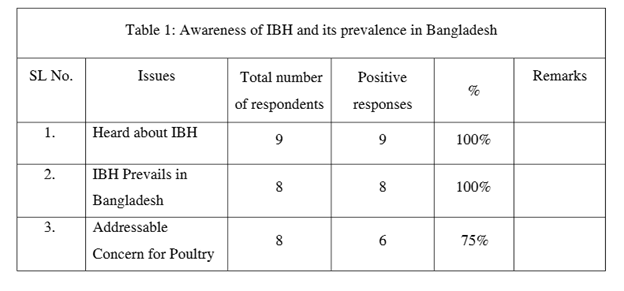
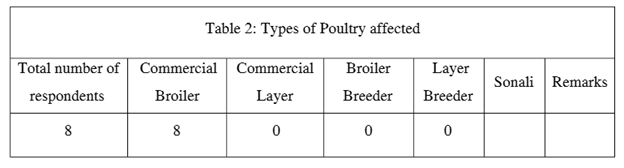
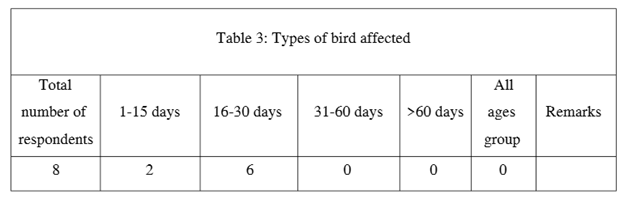
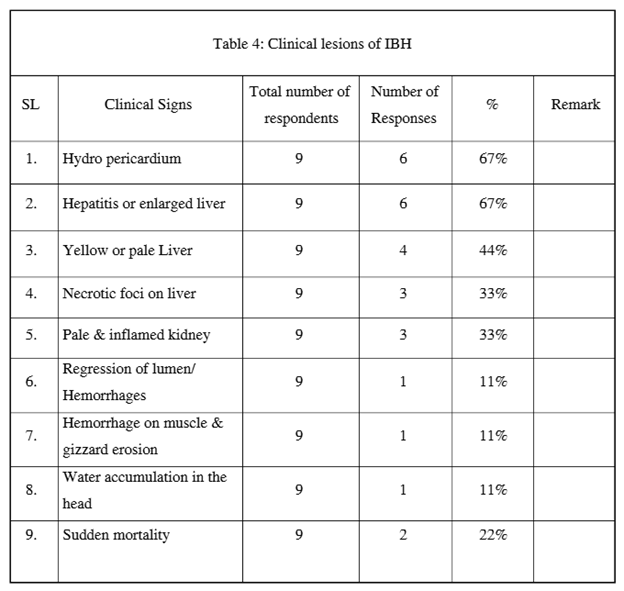
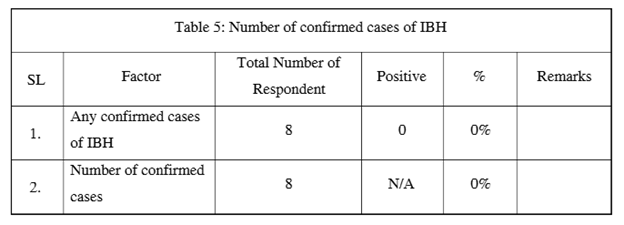
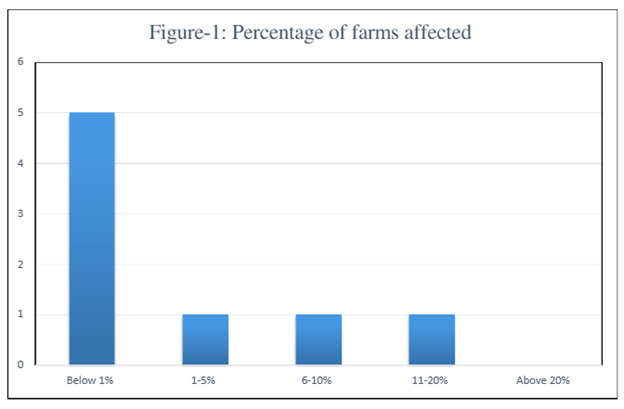
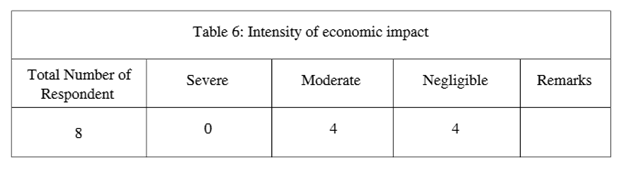
Poultry farming plays an important role in our national economy and it is now considered as one of the largest employment opportunities in this country. There are about 70,000 commercial farms, 100 breeder farms & hatcheries, 8 grandparent stock farm and over 200 feed mills in this country. The breeder farms and hatcheries produced about 700 million and 50 million Layer day-old chicks in 2019. Although poultry farming has become an attractive income source for the people, especially the unemployed youth and women in Bangladesh, they are facing the problem of disease outbreaks in broiler farms that cause mortality, lower growth and higher FCR. Among these diseases, the poultry practitioners are suspecting about the incidence of Inclusion Body Hepatitis (IBH) disease in our country. Over the last two decades, an increasing number of IBH outbreaks have been reported in different geographic locations including India. Inclusion Body Hepatitis (IBH) virus mainly affects broilers up to five weeks of age but it has also been reported sporadically in layers and broiler breeders. Some authors reported that mortality during IBH outbreaks peaks within 3-4 days and can reach 10% and occasionally be as high as 30%. The disease can spread both vertically and horizontally/laterally and has been reported in most of the Asian countries. It is now suspected as an emerging disease of poultry in Bangladesh. A study was conducted to know the current status of IBH in this country. It was found from the study that 100% of respondents believe that there is a prevalence of IBH in this country and the disease affects birds <6 weeks old and as young as 4 days of age. No one reported the incidence of this disease found in layers or breeders. It is economically important due to significantly high mortality in young broiler birds that may reach up to 40%. According to the respondents, clinical lesions in the suspected cases of IBH are Hydro pericardium (67%), Hepatitis or enlarged liver (67%), Yellow or pale liver (44%), Necrotic foci on the liver (33%), Pale & inflamed kidney (33%), Regression of lumen/ Hemorrhages (11%), Hemorrhage on muscle & gizzard erosion (11%), Water accumulation in the head (11%). Sudden mortality (22%). 50% of our respondents think that the percentage of farms affected by IBH in our country is 1-5%, while 25% think it is 6-10%. 12.5% of respondents think it’s below 1% and the others think it ranges from 11-20%. The interesting finding of the study is that none of the participants mention the confirmed case by any laboratory test (by molecular or histopathological examination). Most of the respondents (75%) think that this is an addressable concern. Therefore, further investigation is needed for the confirmed cases of IBH. Considering it as an emerging disease in the poultry industry, we should think now to take the necessary steps to control the disease and it could be done by proper management along with the vaccination programme. Introduction: Poultry farming is contributing to the growth of the national economy and it is now considered as an important sector in creating both direct and indirect employment opportunities, improving food security and nutrition and reducing poverty in this country. The total investment in the poultry sector is about BDT 35,000 crore (USD 4.12 billion) and it has created employment opportunities for over 6.0 million people, the majority of them being youth and women (BPICC, 2020). There are about 70,000 commercial farms, 100 breeder farms & hatcheries, 8 grandparent stock farm and over 200 feed mills in this country (http://wpsa-bb.com/poultry-at-a-glance/, BAB). The breeder farms and hatcheries produce about 16 million broiler and 1.0 million Layer day old chicks per week. However, the recent Covid-19 pandemic situation has seriously affected the entire poultry value chain and one estimation found that it resulted in about 35% drop in day-old chicks (DOC), eggs and meat production in our country (ВРІСС, 2020). Therefore, private poultry sectors, service providers, government and other stakeholders are applying suitable coping mechanisms to overcome the situation. Though poultry farming has become attractive an income source for the people, especially the unemployed youth and women in our country, they are facing the problem of disease outbreaks in broiler farms that cause mortality, lower growth and higher FCR. The poultry practitioner and consultants are suspecting it as Inclusion Body Hepatitis (IBH) disease and consider it as an emerging disease in this country. Therefore, ACI Animal Health conducted a study to know about the prevalence of the Inclusion Body Hepatitis (IBH) disease and its economic impact in this country. In poultry, Inclusion Body Hepatitis (IBH) principally affects broilers up to five weeks of age but it has also been reported sporadically in layers and broiler breeders. IBH is a very much pronounced and important disease in broilers, especially sensitive to high growth broilers. IBH is very important for broiler farmers and it causes tremendous financial losses because there is no corrective measure that can be taken if the symptoms are exposed. IBH is an acute disease of young chickens caused by fowl adenoviruses (FAdVs). It was first described in 1963 in the USA (Helmboldt and Frazier, 1963). Then, the disease has been reported in many countries worldwide. It is a sporadic disease condition caused by several serotypes of fowl adenoviruses (Franco et al., 1974; Ferran, 2000; Fitzgerald, 2008; 2006; Dar et al., 2012). Horizontal and vertical transmission plays an important role in IBH (Noormohammadi, .2019). It is an emerging poultry disease in recent times characterized by sudden onset with a high death rate (Memon et al., 2006). The disease was first described in young broilers in Angara Goth, Pakistan, during the year 1987. Thereafter, it spread throughout Pakistan (Anjum et al., 1989) as neighboring countries in Asia like India (Dahiya et al., 2001). During the last decade, several novel diseases, which affected the poultry with variable consequences, have emerged. Among these, IBH has a significant position (Fernandez, 2003; Kataria et al.,). Several different serotypes have been isolated from disease outbreaks, but they may also be isolated from healthy chickens. In chickens less than 6 weeks of age, the mortality usually varies from 2-40 percent. The feed conversion ratio may be affected in addition to the reduction in weight gain (Cowen, 1992). In our country, sudden mortality usually is seen in chickens (<6 weeks old) and as young as 4 days of age. In recent years in Bangladesh, it’s assumed that IBH prevails in poultry. This report can be a good source of information to understand the current situation of IBH disease in Bangladesh. Objectives of the Study: The objectives of this study were as follows:
Survey Methodology: Nine experienced and qualified technical experts were selected as participants of this study who are directly associated and involved in the poultry farming of Bangladesh. They were selected from different geographical locations and different organizations. The respondents are from universities, private sectors, private practitioners and the Department of Livestock Services (DLS). ACI Animal Health applied a questionnaire method for data collection from the respondents. The survey questionnaire was developed by the technical experts of the ACI Animal Health team (Dr. Md. A. Saleque & others) and it was pretested before distribution to the participants. The survey questionnaire consisted of 11 questions and a comment section. Detailed information was collected based on the questionnaire which includes awareness of IBH, the number of farms that are affected by or susceptible to IBH and clinical findings, types of diagnostic techniques they adopted to, frequency of incidences and economic impacts etc. Result and discussion For better understanding, the findings have been grouped into several sections:
Conclusion It has been suspected from observations that IBH disease has been prevailing in Bangladesh. But there has not been any confirmation on the matter yet. Therefore, further investigation is needed urgently to confirm the prevalence of IBH and its effects in the poultry industry in this country. Currently, IBH is considered an emerging disease of poultry. Concurrent infections of other immunosuppressive viruses like IBDV and MDV significantly increase the severity of infection in field conditions. Good hygiene, management practices, strict biosecurity and effective vaccination program are of paramount importance in preventing the disease. We should consider the autogenous vaccines prepared from the prevalent serotype of FAdV and it is practical and financially justifiable for the prevention and control of this disease.
References Anjum MA, Sabri MA and Iqbal Z (1989). Hydropericarditis syndrome in broiler chickens in Pakistan. Vet. Rec. 124:247-248. http://dx.doi.org/10.1136/ντ.124.10.247 PMid:2711581 Balamurugan V and Kataria JM (2006). Economically important non-oncogenic immuno-suppressive viral diseases of chicken-current status. Vet. Res. Commun. 30:541-566 http://dx.doi.org/10.1007/s11259-006-3278-4 PMid:16883664 Bangladesh Poultry Industries Central Council (BPICC) (2020). Unemployment in poultry industry published in Daily Ittefaq, a Newspaper of Bangladesh published on 8/04/2020, Bangladesh Poultry Industries Central Council (BPICC) (2020). Farmers are in problems published in The Daily Nayadiganta published on 01/04/2020 Cowen B (1992). Inclusion body hepatitis-anemia and hydropericardium syndromes: aetiology and control. World’s Poult. Sci. J. 48: 247-254. http://dx.doi.org/10.1079/WPS19920019 Dahiya S, Ravinder N, Srivastava RN, Hess M, Baldev R and Gulati BR (2002). Fowl adenovirus serotype 4 associated with outbreaks of infectious hydropericardium in Haryana, India. Avian Dis. 46(1): 230-233. http://dx.doi.org/10.1637/0005-2086(2002)046 [0230: FASAWO]2.0.CO;2 Dar A, Gomis S, Shirley I, Mutwiri G, Brownlie R, Potter A, Gerdts V and Tikoo SK (2012). Pathotypic and molecular characterization of a fowl adenovirus associated with inclusion body hepatitis in Saskatchewan Chickens. Avian Dis., 56(1):73-81. http://dx.doi.org/10.1637/9764-041911-Reg.1 PMid:22545531 Fernandez A (2003). Emergence and reemergence of poultry diseases. Rev. Cub. Cien. Avi. 27:95-101. Fitzgerald SV (2008). Adenovirus Infections. In: Diseases of Poultry, 12th Ed, Saif YM, AM Fadly, JR Glisson, LR McDougald, LK Nolan and DE Swayne, eds. Iowa State University Press, Iowa, USA, pp: 251-266. McFerran JB and Adair BM (2003). Hydropericardium Syndrome. In: Diseases of Poultry, 11th Ed. Y. M. Saif, J. H. Barnes, J. R. Glisson, A. M. Fadly, L. R. McDougald and D. E. Swayne, Iowa State University Press, Ames, USA. pp: 220-221. Memon ZN, Gachal GS, Yusuf M and Arian MA (2006). Incidence of hydropericardium syndrome disease in broilers of Hyderabad, Sindh. Int. J. Poultry Sci. 5(7): 673-67. http://dx.doi.org/10.3923/ijps.2006.673.676 Dar, A., S. Gomis, I. Shirley, G. Mutwiri, R. Brownlie, A. Poter, V. Gerdts and S.K. Tikoo 2012. Pathotypic and molecular characterization of a fowl adenovirus associated with inclusion body hepatitis in Saskatchewan chickens. Avian Dis. 56: 73-81 Helmboldt, C.F. and M.N. Frazier. 1963. Avian hepatic inclusion bodies of unknown significance. Avian Dis. 7:446-450. Noormohammadi, A.H.2019. Inclusion body hepatitis and hepatitis hydropericardium syndrome in poultry. MSD Manual. |