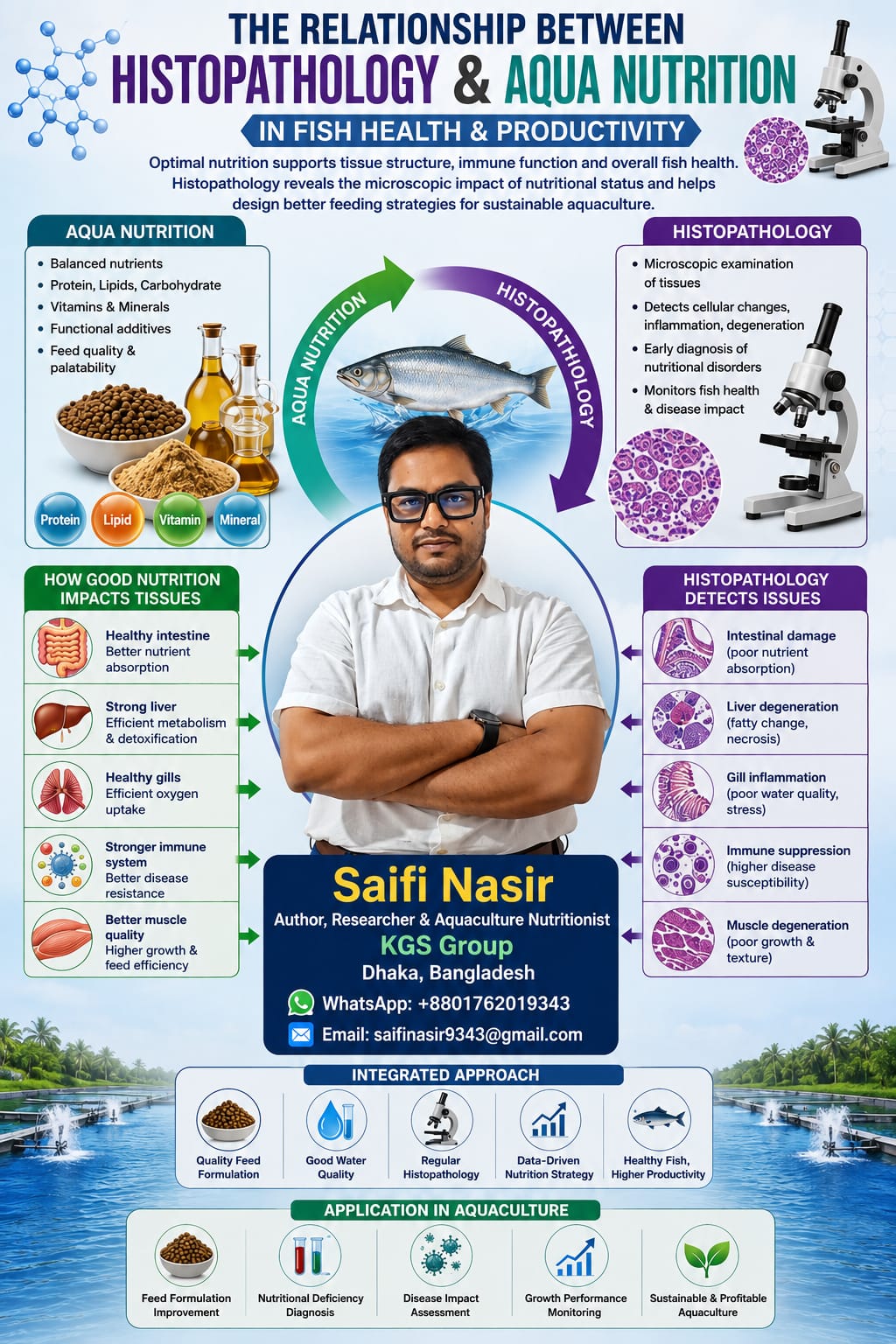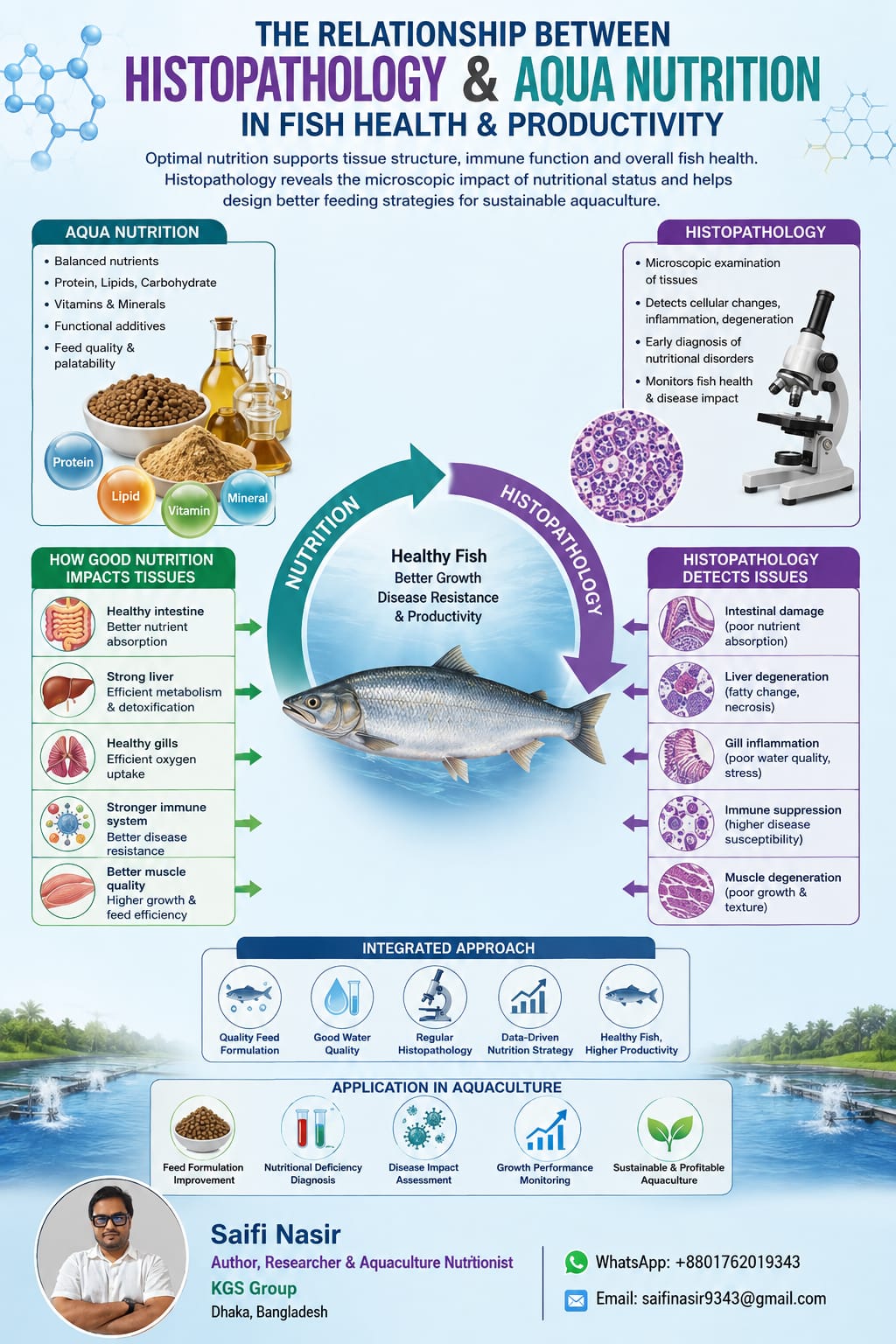







| Saifi Nasir Author, Researcher & Aquaculture Nutritionist KGS Group, Dhaka, Bangladesh Email: saifinasir9343@gmail.com Mobile & WhatsApp: +8801762019343 Abstract With the rapid advancement of aquaculture nutrition and feed technology, fish histopathology and fish feed nutrition have become two highly complementary scientific disciplines. Histopathology, the microscopic examination of tissues, is one of the most reliable methods for evaluating the biological effects of aquafeeds. Fish may appear healthy externally while pathological changes have already begun at the cellular or tissue level. Such hidden alterations can only be accurately detected through histopathological examination. Histopathology enables researchers to determine whether a feed formulation causes nutritional deficiencies, nutrient excesses, toxicity, or long-term health problems. Consequently, it has become an indispensable tool for assessing feed quality, ingredient safety, and the overall effectiveness of modern aquafeeds. Objectives of Fish Histopathology The primary objective of fish histopathology is to investigate microscopic alterations in tissues and organs caused by:
These microscopic findings provide valuable information regarding the physiological and pathological responses of fish to different dietary treatments. Histopathological Indicators in Nutritional Evaluation Histopathology allows researchers to determine how specific nutrients or feed ingredients affect different organs. The organs most commonly examined include:
These organs are considered key indicators during feed evaluation because they directly reflect nutritional status and physiological health.
Major Organs and Their Nutritional Significance 1. Liver The liver is the most important indicator of nutritional status and feed-related toxicity. Histopathological alterations may include:
2. Intestine The intestine is essential for evaluating digestion, nutrient absorption, and gut health. Typical pathological findings include:
3. Kidney The kidney plays a vital role in:
Histopathological examination helps detect:
4. Gills Gills are excellent indicators of respiratory health and environmental stress. Common histopathological observations include:
These changes may also indicate feed-related physiological stress. 5. Spleen The spleen serves as an important indicator of immune status and disease resistance. 6. Muscle Muscle histology reflects:
7. Pancreas Pancreatic tissue evaluation provides information regarding digestive enzyme production and digestive efficiency. Importance of Histopathology in Modern Feed Development Detection of Hidden Nutritional Effects Histopathology is indispensable for identifying hidden biological effects of aquafeeds. A feed may produce:
while simultaneously causing:
These pathological changes often remain undetectable without microscopic examination. Safety Evaluation of Novel Feed Ingredients Modern aquafeeds increasingly utilize alternative protein and functional ingredients, including:
Histopathology helps determine whether these ingredients produce adverse effects when included at high dietary levels. Examples include:
Role in Feed Formula Optimization Feed formulation should not rely solely on nutrient calculations. An effective feed evaluation system should integrate: Nutritional Parameters
Biological Parameters
Even when two diets produce similar FCR values, histopathology may reveal significant differences in their long-term safety.
Organ-Based Nutritional Assessment Different organs provide distinct information regarding feed quality:
Role of Histopathology in Feed Research Developing high-quality, sustainable, cost-effective, and scientifically validated aquafeeds requires a comprehensive evaluation system. A complete feed evaluation program may approximately include:
The relative importance of each parameter may vary depending on fish species and research objectives. Before commercial release, a new fish feed should ideally undergo:
Such evaluations substantially improve confidence in the nutritional safety and long-term performance of the feed. This is particularly important when evaluating:
Comprehensive Health Assessment Modern feed evaluation should extend beyond growth performance, survival rate, and FCR. Combined histopathological examination of the:
provides the most comprehensive understanding of:
Conclusion Fish histopathology and fish feed nutrition are directly and scientifically interconnected. Histopathology represents one of the most powerful diagnostic tools for evaluating feed quality, nutrient adequacy, ingredient safety, and long-term health effects in aquaculture species. Modern aquaculture nutrition research should not rely exclusively on growth performance, feed conversion ratio, or survival rate. Integrating histopathological evaluation into feed trials enables researchers to make far more reliable conclusions regarding feed safety and biological effectiveness. Rather than serving merely as the final stage of feed evaluation, histopathology should be regarded as an essential research tool for ensuring the nutritional quality, safety, and long-term health of cultured fish. Its integration into modern aquafeed development contributes significantly to the production of scientifically validated, sustainable, and high-performance aquaculture feeds. |